
Short answer: a strong K-pop audition tape is clear, honest, and easy to evaluate. Follow the company's notice exactly, choose material that shows your strongest controlled skill in the first few seconds, film full body for dance and clean audio for vocal, use a stable camera and front lighting, introduce yourself briefly, and don't edit to hide mistakes. Readable beats impressive.
What an audition tape needs to do
Your tape is often the entire first impression. In a few seconds, an evaluator decides whether to keep watching. The tape's job isn't to look like a music video. It's to make your current level and your strongest lane obvious, quickly.
Step 1 — Read the audition notice first
Every company specifies its own requirements, and they vary by company and round. Before filming, write down:
- Eligible ages and categories (vocal, dance, rap, etc.)
- Required material — one or both of dance and vocal? Free choice or assigned?
- Length limits, file type, orientation, and naming
- Whether an introduction is required, and in what language
- Submission method and deadline
If anything in this guide conflicts with the notice, follow the notice.
Step 2 — Choose material that shows your strongest skill
Dance material
Pick choreography you can execute cleanly at full energy. Evaluators should see rhythm, finished lines, and expression right away. A hard routine danced roughly hurts more than a simpler one danced well.
Vocal material
Choose a section where your first notes show your tone and stability. Change the key if needed. Don't build the whole tape around a high note you can't hold reliably.
Rap material
Pick a verse that shows flow and diction clearly. Clean delivery beats speed.
Whatever you pick: show the strongest thing you can control, not the hardest thing you can attempt. Not sure what that is? Read K-pop Group Positions Explained.
Step 3 — Set up your filming space
Camera
A recent phone is enough. Use a tripod or a steady surface. Clean the lens. Use the orientation the notice asks for.
Framing
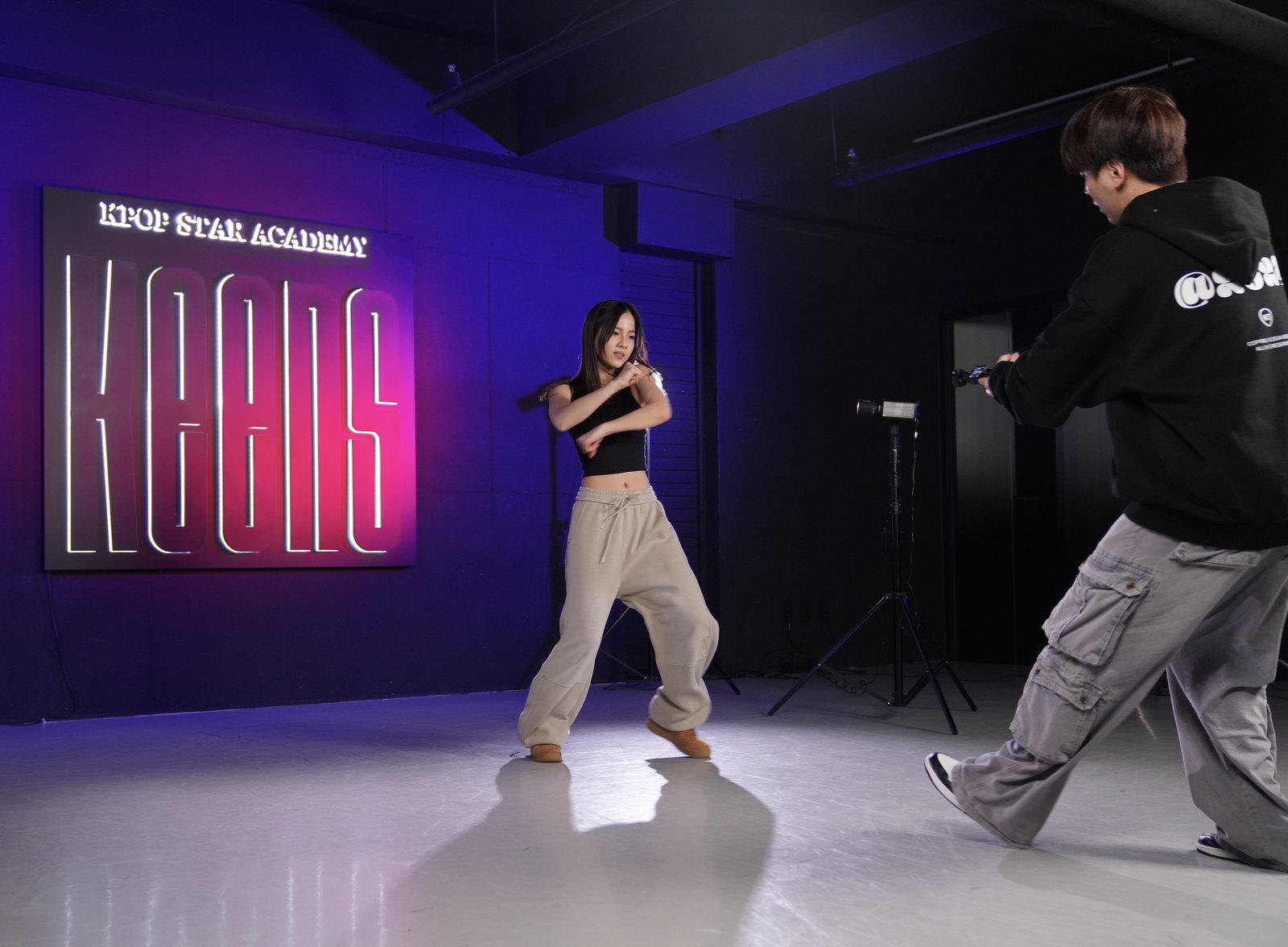
- Dance: full body, head to feet, the whole time — leave space above your head and below your feet.
- Vocal: chest-up or waist-up, face clearly visible.
- Keep the camera at roughly chest height, not looking down from above.
Lighting
Light from the front (a window in front of you or a simple ring light). Avoid strong backlight that turns you into a silhouette.
Audio
- Record vocals in a quiet room with soft furnishings.
- No autotune, reverb, or heavy filters.
- For dance, make sure the music is audible but not distorted.
- If you sing with an accompaniment track, keep it quieter than your voice.
Step 4 — Your introduction
Keep it short and natural: name, age, where you're from, and what you'll perform. Look into the camera and smile. If the notice asks for Korean, practice it until it's comfortable; otherwise, speak the language you're clearest in.
Step 5 — What to wear
Simple, fitted clothes that show your body lines for dance — solid colors work well. Neat hair off your face. Light, natural makeup if any. You're showing yourself, not a costume.
Step 6 — Record, review, re-record
- Film several full takes.
- Watch each at normal speed, then at half speed for timing.
- Watch dance takes with the sound off to check expression.
- Choose the most honest, controlled take — not the one with the single best moment.
- Re-record if framing, light, or audio failed.
Want a structured run-up? Use our 30-day audition plan.
Common tape mistakes
- Cropping off feet or hands during dance
- Backlit or dim lighting
- Echoey room or music louder than voice
- Heavy filters, beauty effects, or vocal processing
- Jump cuts that hide mistakes
- Choosing material that's too difficult
- Long intros before the performance starts
- Ignoring the notice's length or format rules
Pre-submit checklist
- Material matches the notice's requirements
- Eligible age and category confirmed on the current notice
- Full body visible for all of the dance
- Face clearly lit
- Vocal audio clean, no effects
- Short, confident introduction
- No edits hiding mistakes
- Length, file type, and naming correct
- Watched once more on a different device
- Submitted before the deadline
Get your tape read before a company does. A Level Check scores your footage 0–10 with written notes from a Keens Seoul evaluator. Or start K-TOP online training.
Keep reading: How to check one company's minimum age · K-pop Audition Requirements · How to Know If You Are Good Enough
FAQ
How long should a K-pop audition video be?+
Follow the company's notice. If none is given, keep each performance short and focused, and get to your strongest moment quickly.
Can I film my audition tape on a phone?+
Yes. Stable framing, good front light, and clean audio matter more than the camera.
Should I edit my audition video?+
Only basic trimming. Don't use effects or cuts that hide mistakes.
Should I sing and dance in the same video?+
Do what the notice asks. If it allows separate clips, separate them so each is easy to evaluate.