
Short answer: Kpop dance training online means drilling the fundamentals evaluators look at first — rhythm, isolations, finished lines, dynamics, and expression — on a regular schedule, filming yourself, and getting feedback on what the camera shows. Choreography is where you apply those fundamentals.
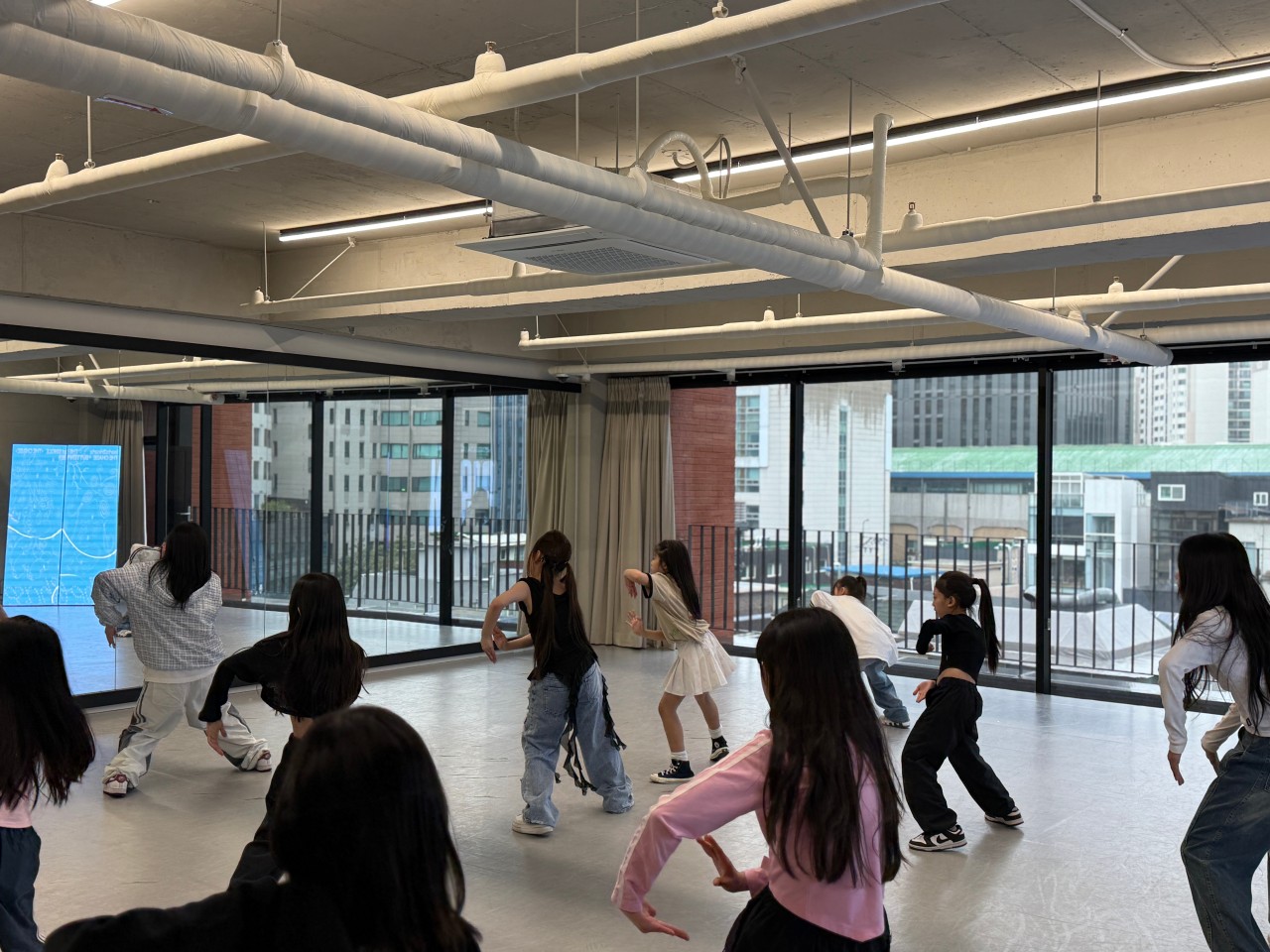
Learning covers vs. dance training
Learning a cover teaches you a sequence of moves. Training teaches your body to execute any sequence with control. Many dancers who have learned dozens of covers stall around the same level because their fundamentals never got corrected: accents land a little late, lines aren't finished, the upper body is stiff, the face goes blank in hard sections.
Covers are great for motivation and for practicing performance. But if covers are your whole training, you're mostly rehearsing your existing habits.
What evaluators check in a K-pop dance tape
In the first seconds of a dance tape, a trained evaluator reads:
- Rhythm: are you on the beat, or slightly behind it?
- Control: do moves start and stop cleanly?
- Lines: are arms, legs, and angles fully extended and finished?
- Dynamics: is there contrast between sharp and soft, big and small?
- Expression: does your face and energy match the song?
- Learning signals: does it look like you'd pick up corrections quickly?
Difficulty is low on the list. A simple routine danced cleanly reads stronger than a hard one danced roughly.
The fundamentals to drill every session
Rhythm and groove
Down-bounce and up-bounce to a simple beat. Then add steps. Your body should feel the count before your feet move.
Isolations
Head, shoulders, chest, ribs, hips — one at a time, slowly, then on beat. Isolation control is what makes K-pop choreography look "clean."
Lines and finishing
Hit a position and hold it for a full count. Check in the camera that arms are extended, angles are sharp, and nothing collapses early.
Dynamics and accents
Take an 8-count and dance it three ways: all sharp, all soft, then mixed as the music suggests. Accents are where choreography comes alive.
Expression
Run a section facing the camera with full facial expression. Then watch with the sound off. If you can't tell what the song is about, your face isn't doing enough.
A weekly online dance routine
| Day | Focus (60–90 min) |
|---|---|
| Mon | Rhythm + isolations (40%), choreography section (60%) |
| Tue | Lines + dynamics drills, same section |
| Wed | Stamina: full-out runs, short rests |
| Thu | Rhythm + isolations, section detail work |
| Fri | Expression to camera; film a "review" take |
| Sat | Full run-through + compare with last week's take |
| Sun | Rest / stretching |
Keep the same choreography section for two to four weeks. Depth beats variety.
How to film and review yourself
- Film full body, head to feet, with the phone at roughly waist-to-chest height.
- Use steady lighting from the front.
- Film the mirror-free version — face the camera, not the mirror.
- Watch once at normal speed, once at 0.5x for timing, and once with no sound for expression.
- Write down one fix per review. Trying to fix everything fixes nothing.
Choosing choreography for training vs. auditions
For training, pick choreography that stretches your weakest fundamental — something isolation-heavy if your upper body is stiff, for example. For auditions, pick choreography that shows your strongest controlled skill within the first few seconds. More in How to Prepare a K-pop Audition Tape.
When online dance training stalls
Signs you need outside feedback:
- Your takes from this month look like last month's
- People say you're "good" but you're not getting audition responses
- You're not sure whether to fix rhythm, lines, or expression first
That's the point where a trained eye saves months. Once the weekly drill is in place, a class or curriculum can keep it going. See online K-pop training programs when you are choosing what to follow.
How dance training works at Keens
Keens' dance curriculum comes from the system Jae Shim built during twenty years as Performance Director at SM Entertainment. The Keens Seoul coaching team includes choreographers and trainers who've worked with top K-pop acts.
- Level Check: submit a dance clip, get a 0–10 score and skill-by-skill notes (control, lines, accents, dynamics, expression).
- K-TOP online training: structured dance lessons plus a Practice Hall for drill loops.
- K-TOP 1:1: a Keens trainer reviews your dance footage every week.
- Summer Intensive Seoul: 14 days of daily choreography and technique on the Keens floor.
Training starts from age 5.
See what your dancing really shows. Submit a clip for a Level Check, or start K-TOP online training.
Keep reading: K-pop Vocal Training Online · How to Train Like a K-pop Trainee at Home · K-pop Group Positions Explained
FAQ
Can you learn K-pop dance online?+
Yes. Drill fundamentals, film yourself, and get regular outside feedback.
How often should I practice K-pop dance?+
Five or six days a week, 60–90 minutes, with fundamentals in every session, is a strong routine.
Is learning covers enough to pass an audition?+
Usually not alone. Evaluators look at rhythm, control, lines, and expression more than how many routines you know.
What should Kpop dance training online include?+
A weekly routine of rhythm, isolations, lines, dynamics, and expression, plus filmed reviews of your own takes. Choreography is where you apply those fundamentals.