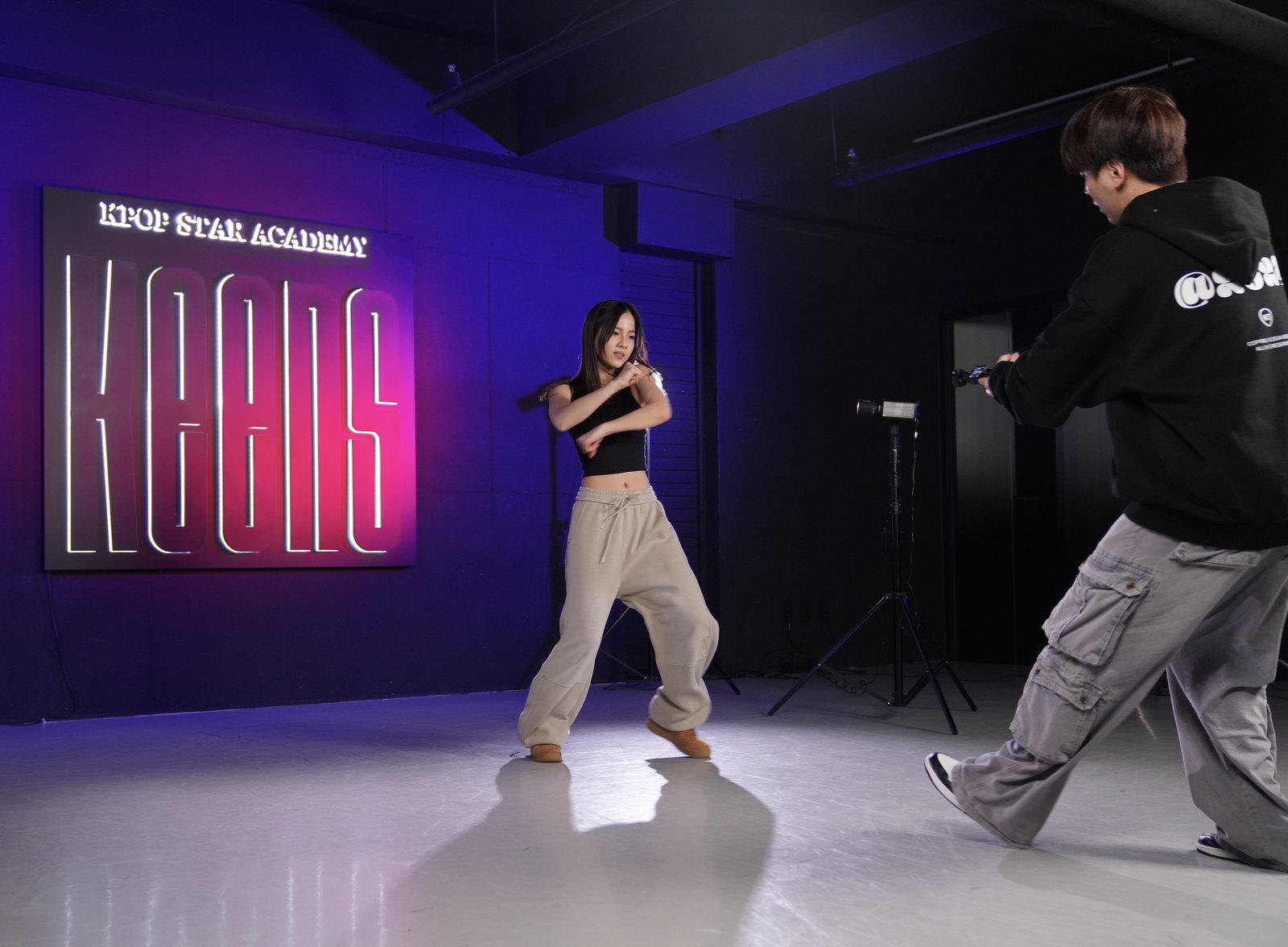
Short answer: casting directors do not reject a strong KPOP audition just because the applicant is from another country. If you have the look, skill, presence, or potential they are searching for in that moment, your nationality is usually not the thing that hurts your chances. Language and visa issues can matter later, when real training and debut planning begin. But at the casting stage, potential comes first.
A lot of international trainees quietly believe they are starting behind everyone else. They assume Korean, Japanese, or Chinese applicants have a more “natural” path into the system, while someone from the US, Europe, Southeast Asia, Latin America, or elsewhere has to overcome nationality before their performance is even considered.
That is not really how casting works.
KPOP companies have spent years casting outside Korea. Japan and China became major international trainee sources because agencies found strong candidates there, not because those nationalities are magically easier to train. The same logic applies elsewhere. If an applicant has the thing a casting team wants — strong potential, visual fit, distinctive vocal tone, performance instinct, fast learning ability, or a market-relevant identity — the fact that they are foreign is not automatically a disadvantage.
The harder truth is this: being foreign usually is not the main problem. Being unreadable as a performer is.
Myth breaker: your passport is not the first gate. A readable audition tape is.
Myth: “I am from the wrong country, so I probably have no chance”
This myth is convenient because it makes the problem external. If the issue is your passport, then your performance does not have to be judged yet.
But casting teams are not looking for the “correct” country first. They are looking for a person who fits a future possibility.
That possibility may be:
- a trainee with strong dance potential;
- a vocalist with a memorable tone;
- a performer with unusual camera pull;
- someone who fits a global-market concept;
- someone young enough and trainable enough to develop;
- someone with raw charisma that survives a rough audition tape.
If you show that clearly, your location matters much less than most applicants think.
Of course, practical hurdles exist. Language can affect training speed. Visa status can affect logistics. Family permission, relocation, school, money, and contract review all become real issues if the opportunity gets serious. But those are later-stage hurdles. They are not usually the reason a promising first audition gets ignored.
At the first gate, the question is simpler:
Does this person have enough potential to keep watching?
What actually hurts your audition chances
If you are applying from another country, the bigger risks are usually not nationality. They are presentation and level.
Your audition chances suffer when:
- the video does not show your full body clearly;
- the audio hides your voice;
- your rhythm is unstable;
- your expression disappears on camera;
- you choose material that hides your strongest lane;
- the tape looks edited to cover mistakes;
- your performance feels copied, not owned;
- there is no clear reason to remember you.
Those are fixable problems. But you have to diagnose them honestly.
Many international trainees spend too much time researching whether foreigners can become idols and not enough time asking whether their current tape gives an evaluator a reason to keep watching.
You do not need to move to Korea first
Moving to Korea can help later, if you already know what you need from the environment. In-person training, stronger peers, Korean-language immersion, and direct correction can all accelerate growth.
But moving is not the first requirement.
If your current level is unclear, moving only makes the uncertainty more expensive. Seoul will not automatically make your timing cleaner, your vocal stronger, or your stage presence more convincing. It gives you access to better conditions. You still need the right standard and the right correction.
A better first sequence is:
- Get a realistic level benchmark.
- Identify your strongest audition lane.
- Train the weakest visible dimension.
- Record a clean tape from home.
- Submit to global auditions and online casting first.
- Use Seoul training later if the next step actually requires it.
This keeps your effort tied to evidence instead of panic.
Check My Level — From $19Your level matters more than your location
A lot of trainees outside Korea are practicing without a standard. They record themselves, compare against idols, ask friends for feedback, watch more tutorials, and still do not know what a trained evaluator would see in the first 60 seconds.
That is the real disadvantage.
A level benchmark tells you what kind of plan you need.
A Level 0–3 performer should focus on foundations: rhythm, coordination, movement quality, vocal basics, and comfort in front of a camera.
A Level 4–5 performer may already look strong in local classes or online covers, but still show gaps trained evaluators catch quickly: late timing, incomplete body lines, weak isolation, unstable breath, or unclear expression.
A Level 6–7 performer may be ready to submit to some agencies, global auditions, or training programs, especially if they have one clear strength.
A Level 8+ performer is already in serious competitive territory and should think about targeted submissions, concept fit, and how to show distinctiveness quickly.
Without that distinction, everyone gets the same vague advice: practice more. That is not a plan.
What agencies look for in foreign applicants
Agencies do not evaluate how badly you want it. They evaluate what your tape shows.
The core signals are usually:
- physical expression and performance presence;
- rhythm and musicality;
- vocal control under pressure;
- body line and movement clarity;
- camera awareness;
- coachability;
- age, current level, and development runway;
- whether there is something distinctive enough to remember.
For international applicants, clarity is especially important. Your video may be the whole first impression. If your framing hides your body, your audio hides your voice, or your song choice hides your real strength, the evaluator has less reason to keep watching.
Your tape should make your strongest lane obvious quickly.
Country examples: India, Mexico, Singapore, and other high-search markets
The same logic applies whether you are asking:
- can you become a KPOP idol from India?
- can you become a KPOP idol from Mexico?
- can you become a KPOP idol from Singapore?
- can you become a KPOP idol from the Philippines, Indonesia, Thailand, the US, Canada, Brazil, or Europe?
The answer is basically the same: your country does not automatically remove you from consideration. A strong audition from India, Mexico, Singapore, or any other international market can still matter if the applicant shows the potential a company is looking for.
What changes by country is usually not the first audition standard. It is the practical path around the audition.
For example, an applicant from India may need to think carefully about parent approval, travel cost, remote training access, and whether online preparation is the most realistic first step. An applicant from Mexico may have similar questions around distance, visa logistics, and how to submit clean online auditions without access to Korean-style training locally. An applicant from Singapore may have easier travel access to Korea than some markets, but still needs the same performance benchmark before spending money on short-term Seoul training.
Those differences matter. But they matter after the basic audition question.
The first question is not: “Is my country accepted?”
The first question is: does my tape show enough potential to make someone keep watching?
That is why international applicants should start with the same core sequence: benchmark your level, identify your strongest lane, train the weakest visible dimension, and submit a clean audition from where you are.
What to prepare from home
A basic audition package usually includes:
- a short face-forward introduction;
- 30–60 seconds of dance with your full body visible;
- 30–60 seconds of vocal with clean audio;
- simple lighting;
- stable camera;
- no heavy vocal processing;
- no jump cuts that hide mistakes.
Do not choose material only because it is difficult. Choose material that reveals your strongest current skill clearly. A clean, confident, readable tape is better than a technically ambitious tape that looks unstable.
The biggest mistake international trainees make
The biggest mistake is waiting for permission to be a serious applicant.
Some trainees wait until they can travel to Korea. Some wait until their Korean is better. Some wait until they feel more confident. Some wait until they are sure foreigners from their country have a chance.
Most of that waiting is avoidance disguised as strategy.
If you have strong potential, your country is not the thing that stops the audition from mattering. The real question is whether your current tape shows that potential clearly.
A benchmark breaks the loop because it turns anxiety into a training plan. You stop asking whether someone from your country can become a KPOP idol and start asking a better question:
What do I need to show better in my next tape?
Where Keens Academy fits
Keens Academy’s Level Check is designed for exactly this moment. It gives aspiring trainees a 0–10 level and dimension-specific feedback, so they can decide whether to submit now, train first, or prepare a more serious audition plan.
For international trainees, it is not a replacement for all training. It is the first map.
If you are outside Korea and trying to become a KPOP idol, start by finding your level. Then build the next 30 days around the gap that matters most.
Check My Level — From $19FAQ
Can foreigners become KPOP idols?
Yes. Foreign applicants can become KPOP idols if they show the potential, skill, presence, or market fit a company is looking for. Being foreign is not usually the thing that hurts the first audition. A weak or unclear tape hurts more.
Can you become a KPOP idol from India?
Yes. An applicant from India can be considered if the audition shows strong enough potential. The bigger early challenge is usually access to calibrated training and feedback, not nationality itself.
Can you become a KPOP idol from Mexico?
Yes. A Mexican applicant can audition through global and online casting routes. Distance, visas, and language may matter later, but the first gate is still whether the performance is strong and memorable enough.
Can you become a KPOP idol from Singapore?
Yes. Singapore-based applicants can audition like other international trainees. Singapore may make travel to Korea more realistic than some markets, but the applicant still needs a clear performance level and strong tape.
Do I need to speak Korean to audition for KPOP?
Not perfectly. Korean ability can help with training and communication later, but a first audition usually depends more on performance potential. If the opportunity becomes serious, language learning becomes more important.
Do I need to move to Korea before auditioning?
No. For most international trainees, it is smarter to benchmark your level, train your weakest dimension, and submit online auditions first. Move or travel for training only when you know what you need from being in Korea.
What should I submit for an online KPOP audition from another country?
Submit a clear, honest tape: full-body dance footage, clean vocal audio if required, a short introduction, stable camera, simple lighting, and no edits that hide mistakes. The goal is to make your current level easy to evaluate.